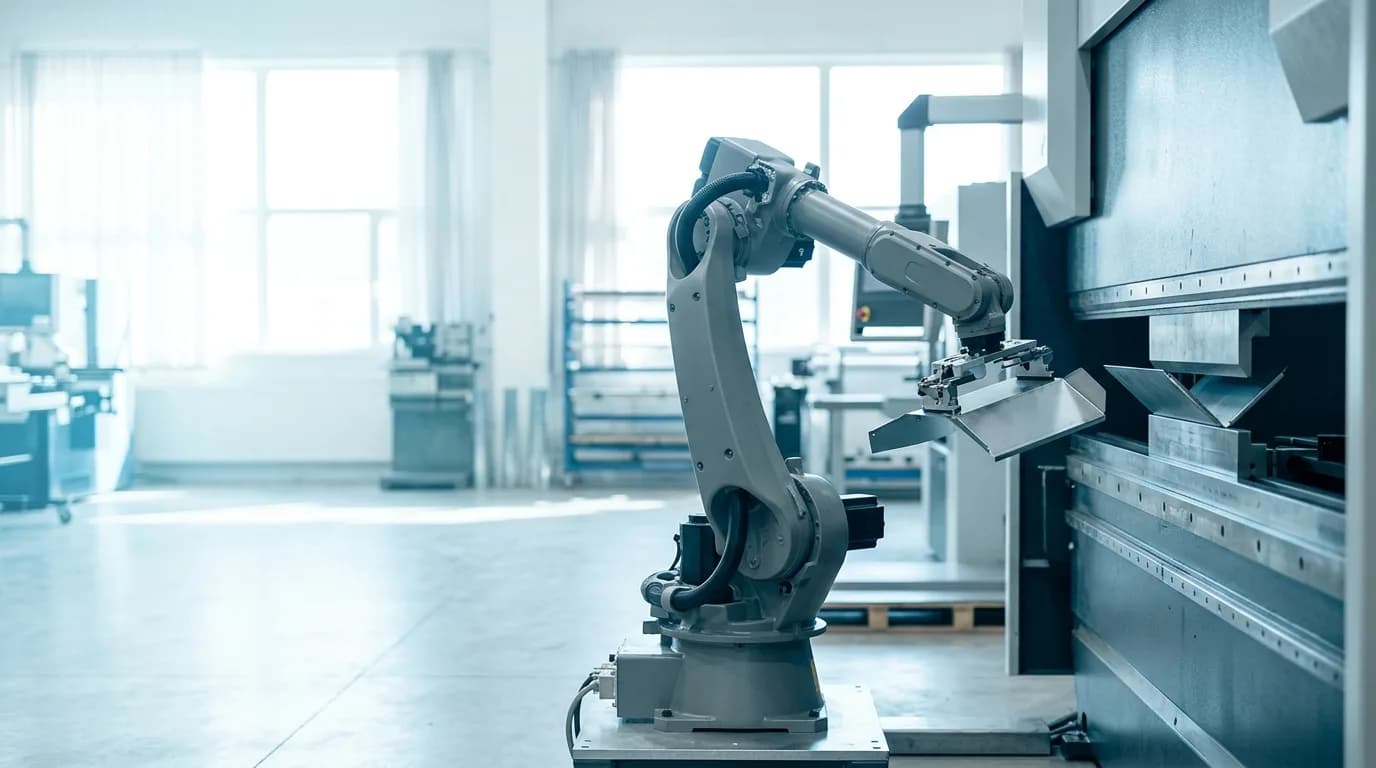
LVD Robotic Bending Systems — Automated Bending Cells
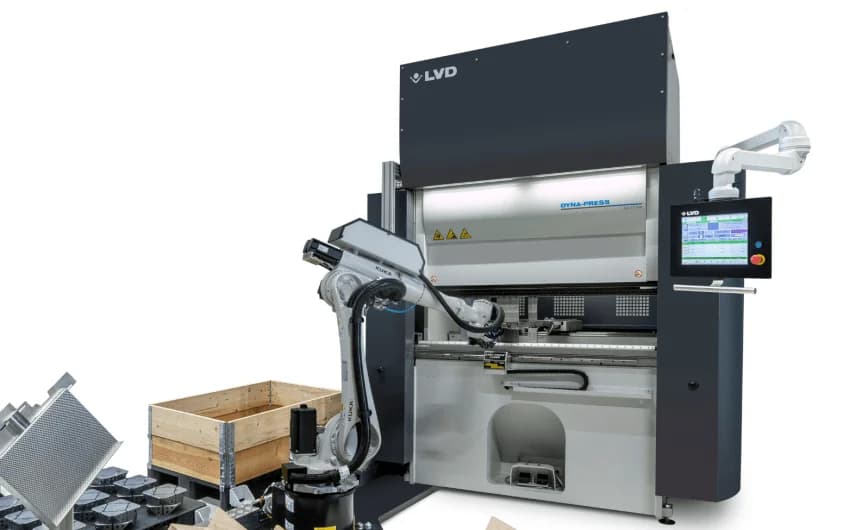
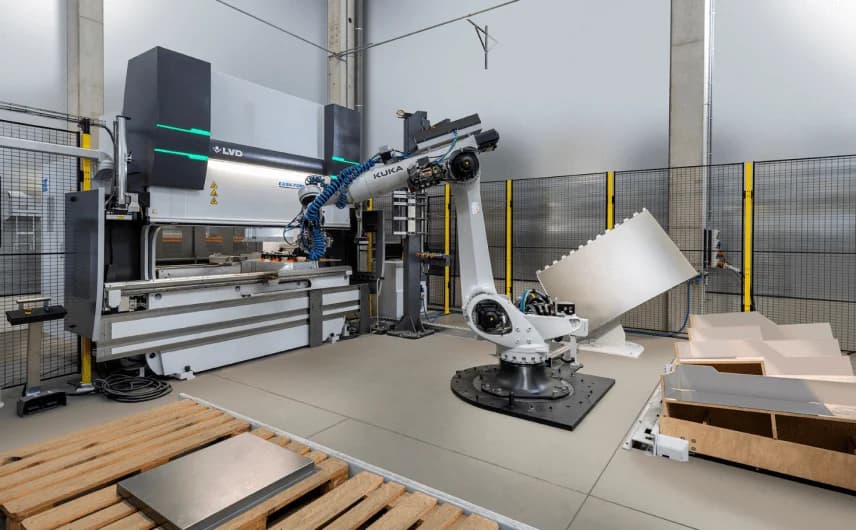
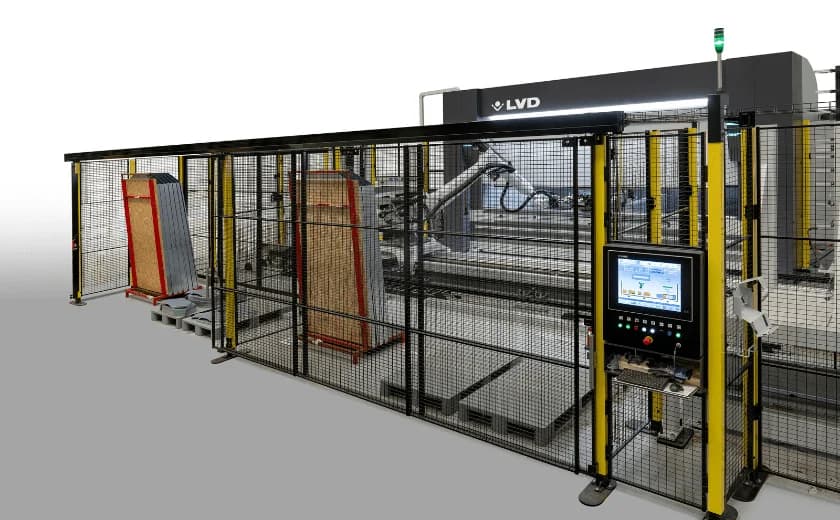
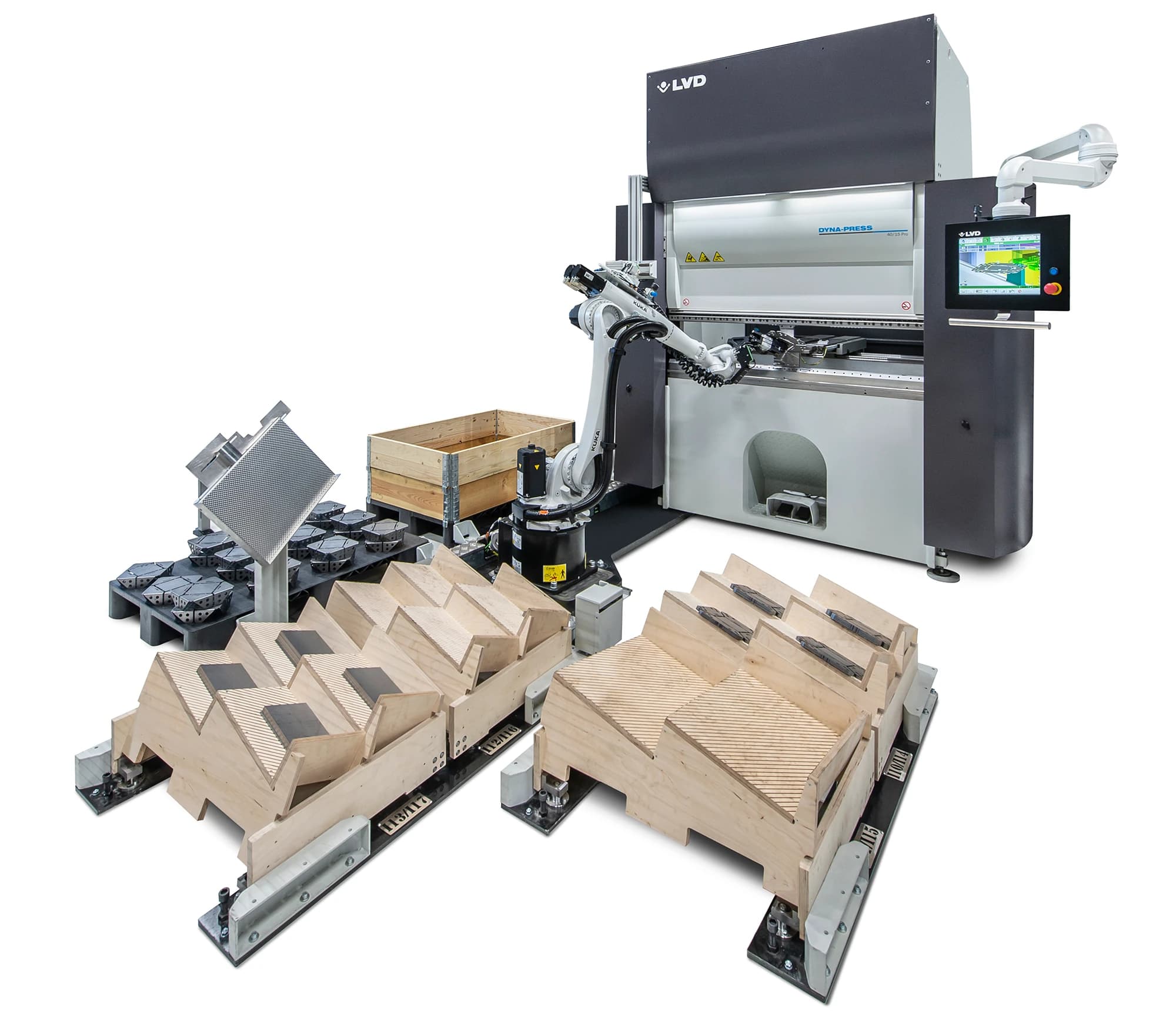
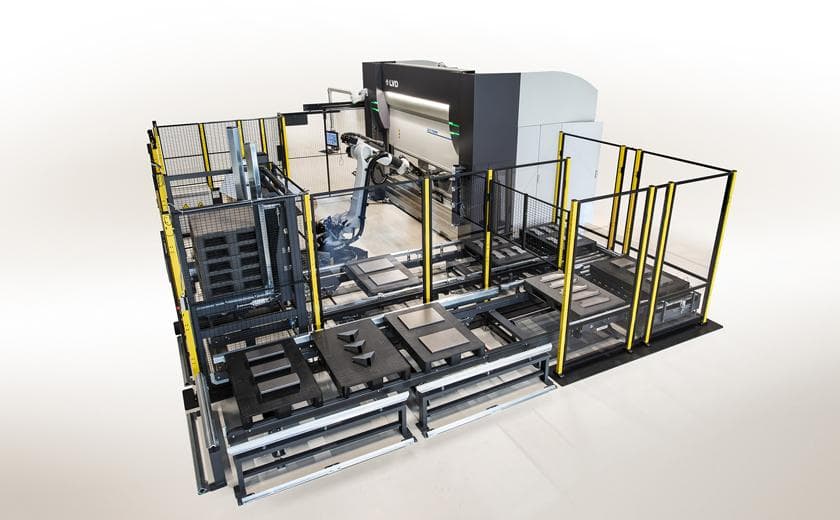
LVD's Robotic Bending Systems replace the old one-size bending cell with a platform you configure. Three sizes — RBS 4, RBS 40 and RBS 80 — set the part envelope, and from there the press brake, the input station, the output station and the gripper are all choices, so the cell is specified around the parts you actually make rather than the other way around.
Every system programs offline through CADMAN-SIM, so there is no robot teaching and a new part goes from drawing to bent sample without an operator at a pendant. All of them can also be run by hand when a job does not justify setting up the robot — which, on a mixed order book, is most of the reason automated cells sit idle elsewhere.
The Technology
One platform, configured in five steps
RBS replaces the fixed bending cell with a platform you specify. The part envelope picks the system — RBS 4, RBS 40 or RBS 80 — and from there the press brake, the input station, the output method and the gripper are each a choice. Five decisions, and the cell is built around the parts you actually make rather than around whatever the cell was designed to suit.
That matters most on a mixed order book. A cell specified for one part family sits idle when the work changes; one specified across your range keeps earning. It is also why every RBS runs manually as well as robotically — a one-off job does not have to justify a robot set-up before it can go on the machine.
The Range
Systems & cells
Why LVD
Why automate bending with LVD
Bending is usually the bottleneck once cutting is automated — it is the operation that still needs a pair of hands on every part. RBS closes that gap without forcing an all-or-nothing commitment to lights-out production.
Every system is supplied, installed and serviced by our National Service Team.
- Offline programming through CADMAN-SIM — no robot teaching, so a new part goes from drawing to bent sample without an operator at a pendant
- Manual or robotic operation from the same cell, so short runs are not penalised
- Easy-Form® Laser adaptive bending compensates in-process for material variation, which is where long bends usually lose parts to scrap
- One CADMAN® chain from drawing import through bend programming to job tracking and ERP
- Touch-i4 tablet reporting real-time KPIs from the cell
- Automatic gripper change on the larger systems, so a mixed batch runs unattended
Compare
Which robotic bending system is right for you?
The part decides the platform. Sizes below are the maximum each system handles — check the heaviest and largest part you would want to automate, not the average one.
RBS 4
Small parts to 600 x 400 mm and 4 kg. The compact entry point, built around a Dyna-Press Pro or PPED
RBS 40
Mid-sized parts to 1600 x 1200 mm and 40 kg, with the widest choice of press brake, input and output options
RBS 80
Large parts to 3050 x 1250 mm and 80 kg, robot on a guided rail serving a long press brake
Dyna-Cell and Ulti-Form
The established LVD cells, now specific configurations within the platform — still available and still supported
Related LVD Solutions
Get In Touch
Contact Us
We work to find the service solution that fits you - and offer the technology and services to protect your investment and build your success.
Service engineers in Brisbane · Sydney · Melbourne · Perth · Wellington