
Laser Hardening
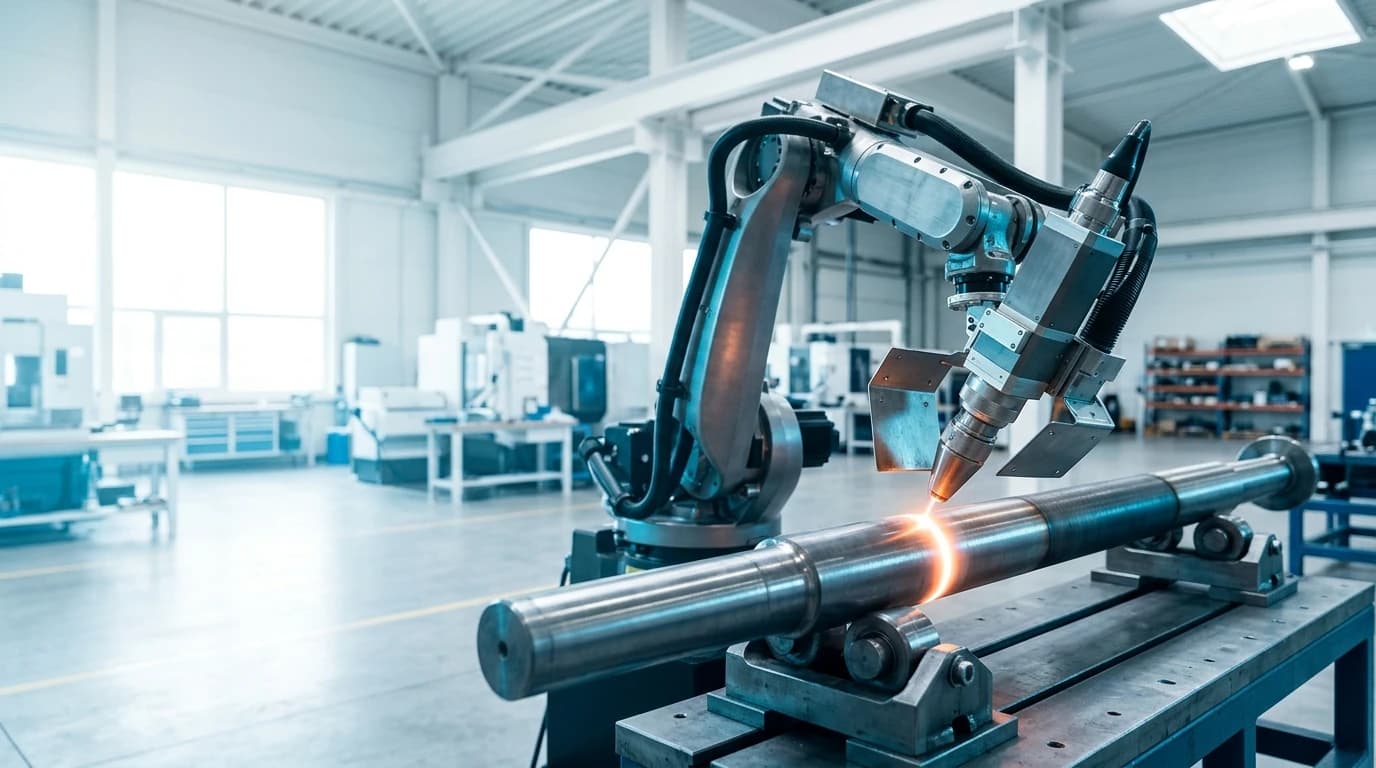
Laser surface hardening treats the wear face of a component and leaves the rest of it alone — a hard, martensitic case exactly where the part sees load, with none of the distortion, scale or quench media that comes with putting the whole thing through a furnace.
Why ALPHA LASER
The advantages at a glance
Laser hardening earns its place wherever a component needs a hard working surface but cannot tolerate what conventional heat treatment does to the rest of it.
The practical limit is depth: laser hardening produces a case measured in tenths of a millimetre to a couple of millimetres. Where a deeper case is needed, through-hardening or case carburising remains the right process, and our engineers will say so.
- Self-quenching — the cold bulk of the component draws heat away fast enough to form martensite, so there is no oil or water quench to manage, filter or dispose of.
- Selective. Only the track the beam follows is hardened, so bearing seats, threads and datum faces elsewhere on the part stay exactly as machined.
- Very low distortion, because only a thin surface layer is ever heated. Finish-machined parts can usually be hardened and put straight into service.
- No scale and no discolouration, so in most cases there is nothing to clean up afterwards.
- Repeatable. Beam power, spot size and traverse speed are set numerically, which makes the case depth consistent across a batch rather than dependent on furnace loading.
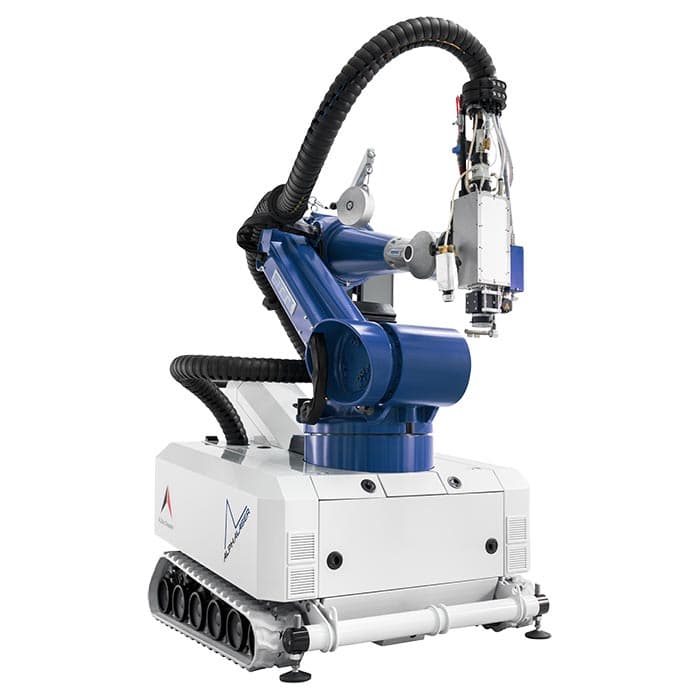
- Mobile systems bring the laser to components too large or too heavy to send out for treatment.
The Technology
How laser hardening works
The beam is defocused into a broad spot and traversed across the surface, heating a thin layer of steel above its austenitising temperature without melting it. The heated layer is a fraction of the component's mass, so the moment the beam moves on, the surrounding cold metal pulls the heat away far faster than any quench tank could. That self-quench transforms the austenite to martensite, leaving a hard case metallurgically bonded to unaffected parent material underneath.
Because the process is driven by numbers rather than by immersion time, it is straightforward to control. Traverse speed and power set the case depth; spot size sets the width of the hardened track. Complex geometry is handled by treating the surfaces that matter and skipping the ones that do not — something no furnace process can do.
Typical results on tool and die steels run in the region of 55–65 HRC with case depths from around 0.1 mm to 1.5 mm, depending on the material and the traverse speed. Suitable materials are the hardenable steels and cast irons: carbon content is what makes the transformation possible, so austenitic stainless steels and aluminium alloys are not candidates.
The Range
Laser hardening systems
Answers
Frequently Asked Questions
Still weighing up specifications? Our engineers will talk through your material mix, sheet sizes and throughput.
On common tool and die steels, in the region of 55–65 HRC. The exact figure depends on the material's carbon content and alloying rather than on the laser — the process reaches the same hardness the steel would reach through conventional quenching, just in a thin surface layer.
Typically 0.1 mm to 1.5 mm. Depth is controlled by traverse speed and beam power, so it can be tuned to the application. If a component needs several millimetres of hardened depth, laser hardening is the wrong process and we will tell you so.
Hardenable steels and cast irons — the material has to have enough carbon to form martensite. Tool steels, die steels, medium and high carbon steels and grey or ductile cast irons all respond well. Austenitic stainless steels and aluminium alloys cannot be hardened this way.
Far less than with furnace treatment. Only a thin surface layer is heated and the bulk of the part stays cold and dimensionally stable, so finish-machined components can usually be hardened and returned straight to service without corrective grinding.
No. The component quenches itself through conduction into its own cold mass, so there is no quench oil or water to buy, filter, monitor or dispose of, and no post-quench cleaning.
Other Laser Processing Applications
Get In Touch
Contact Us
We work to find the service solution that fits you - and offer the technology and services to protect your investment and build your success.
Service engineers in Brisbane · Sydney · Melbourne · Perth · Wellington