Laser Powder Deposit Welding
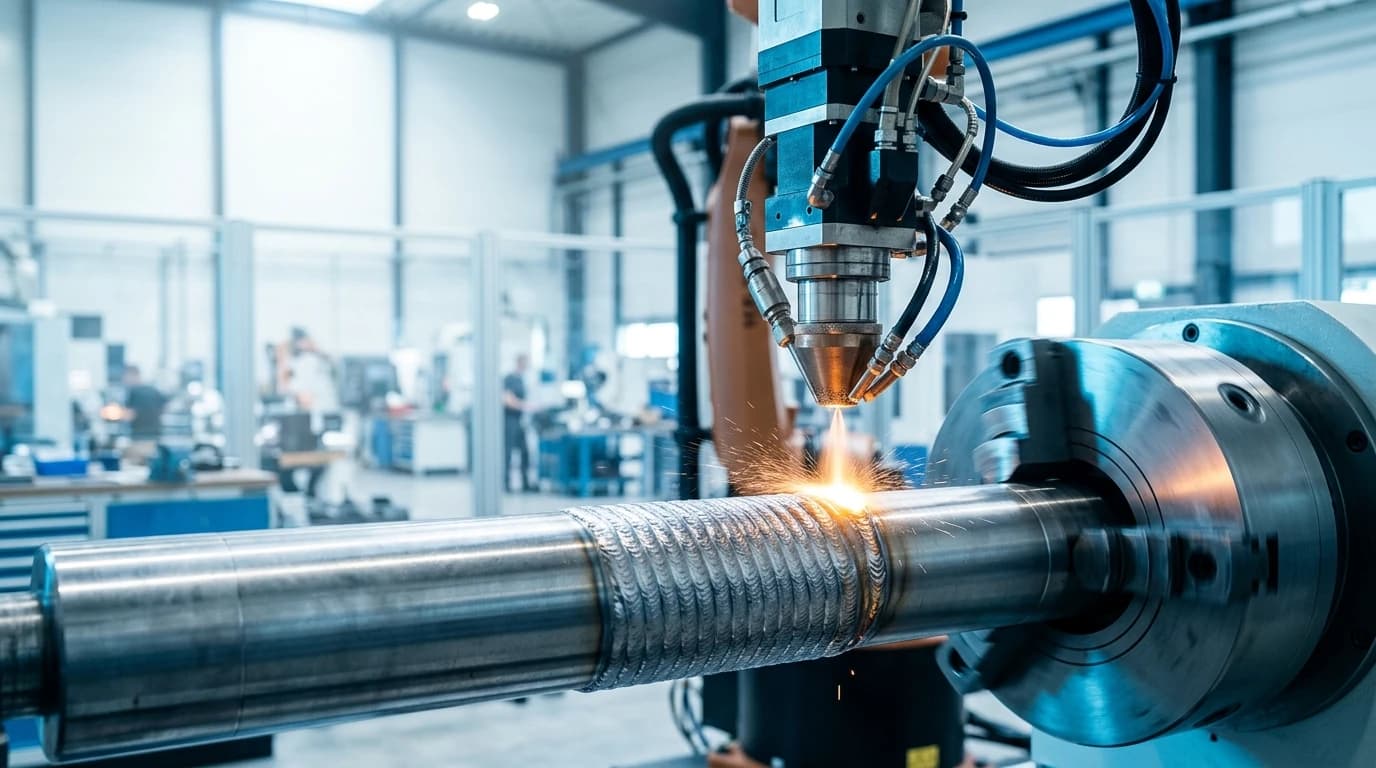
Powder deposit welding adds material rather than joining it — metal powder is blown into the laser focus and fused to the surface layer by layer, building up worn tooling, restoring lost geometry, and laying down wear or corrosion-resistant surfaces on parts that would otherwise be scrapped.
Why ALPHA LASER
The advantages at a glance
Deposition welding is usually chosen for one of two reasons: a component is worn and replacing it is expensive, or a component is new and needs a surface that its base material cannot provide.
- Restores worn geometry on tooling, shafts, rolls and dies, at a fraction of the cost and lead time of remanufacture.
- Applies a genuinely metallurgical bond, not a coating — the deposit is fused to the parent material and will not chip or delaminate.
- Very low dilution, so the deposited alloy keeps its intended properties instead of being diluted by the substrate underneath.
- Low heat input, so heat-treated and finish-machined components survive the process without softening or distorting.
- Deposits dissimilar materials, letting a tough, inexpensive base carry a hard or corrosion-resistant working surface.
- Hardness across a wide range, from soft build-up layers under 20 HRC through to wear-resistant deposits over 70 HRC.
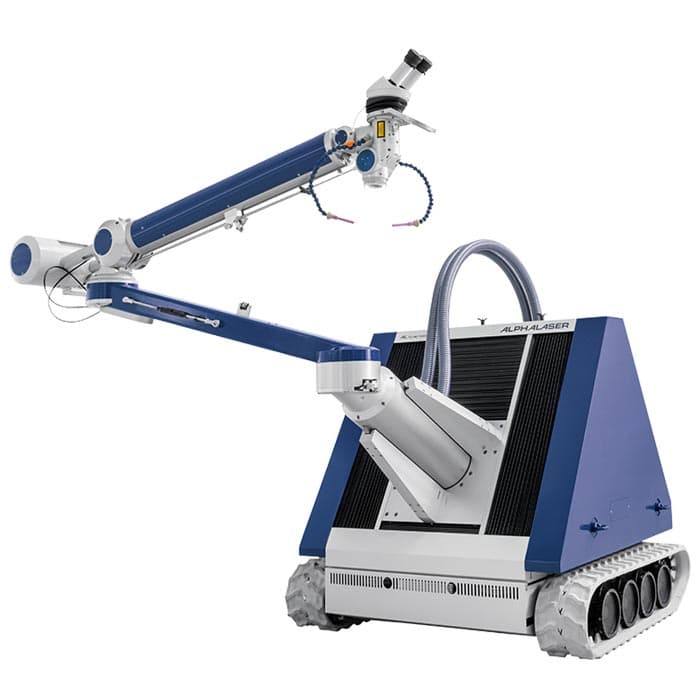
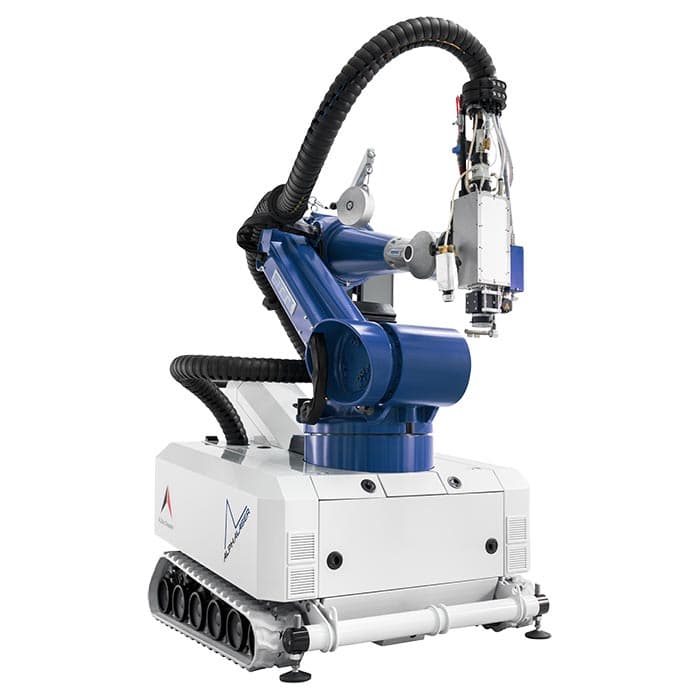
- Mobile systems travel to components too large to move, which for most heavy tooling is the deciding factor.
The Technology
How powder deposit welding works
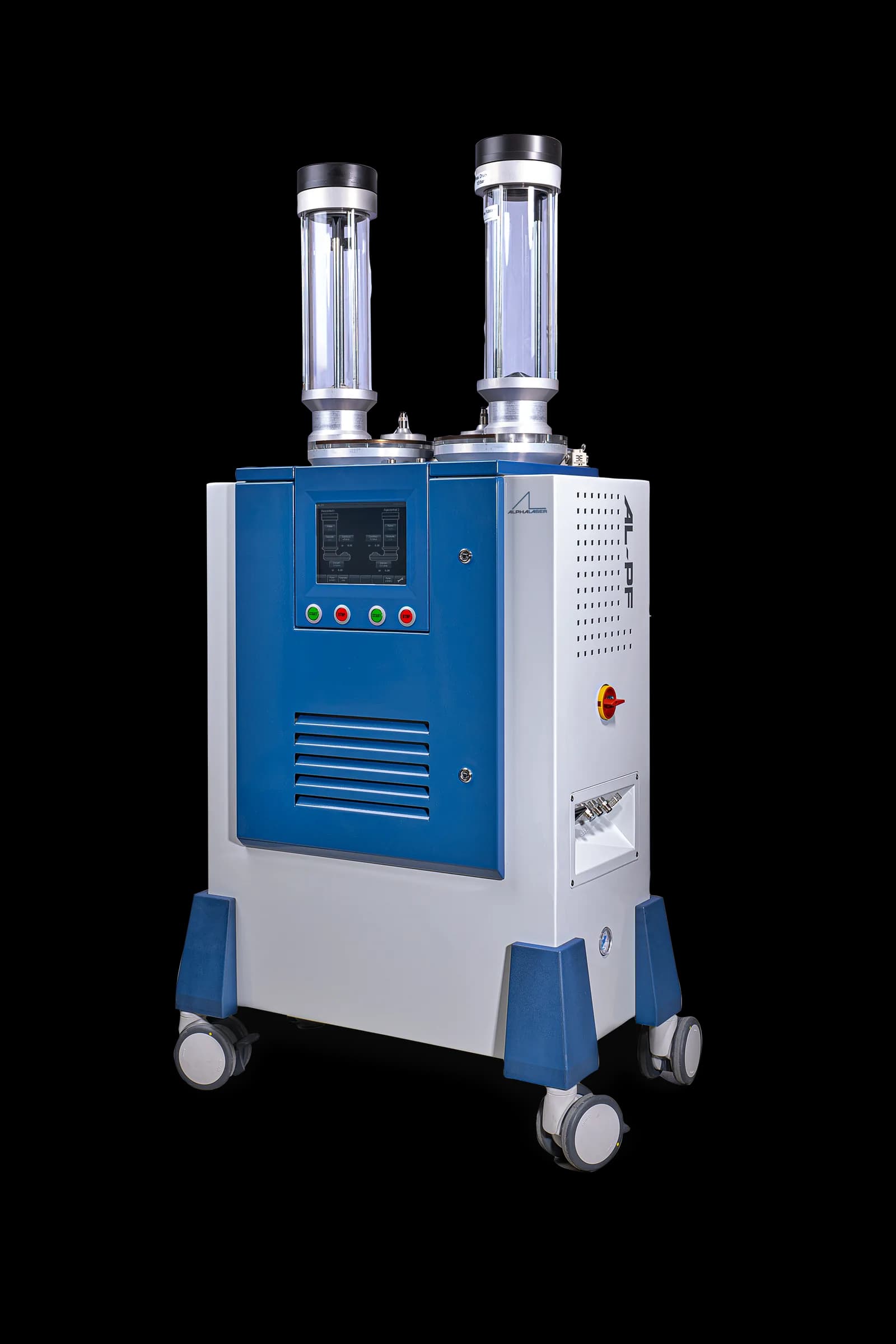
Metal powder is carried by an inert gas stream from the feeder to a nozzle, which delivers it into the laser focus at the surface of the component. The beam melts the powder and, at the same time, a very thin layer of the substrate — the two fuse together and solidify as a single deposit that is metallurgically bonded to the parent material rather than sitting on top of it.
Because only a thin skin of the substrate is melted, dilution stays low. That matters more than it sounds: a hardfacing alloy that gets heavily diluted by the mild steel underneath ends up considerably softer than intended, which is the usual failure mode of higher-heat processes. Keeping the melt shallow is what preserves the deposited alloy's properties.
Passes are laid side by side and stacked to build up thickness, so the process handles everything from a few tenths of a millimetre of wear protection to substantial reconstruction of lost geometry. The deposit is then machined or ground back to the finished dimension.
The Range
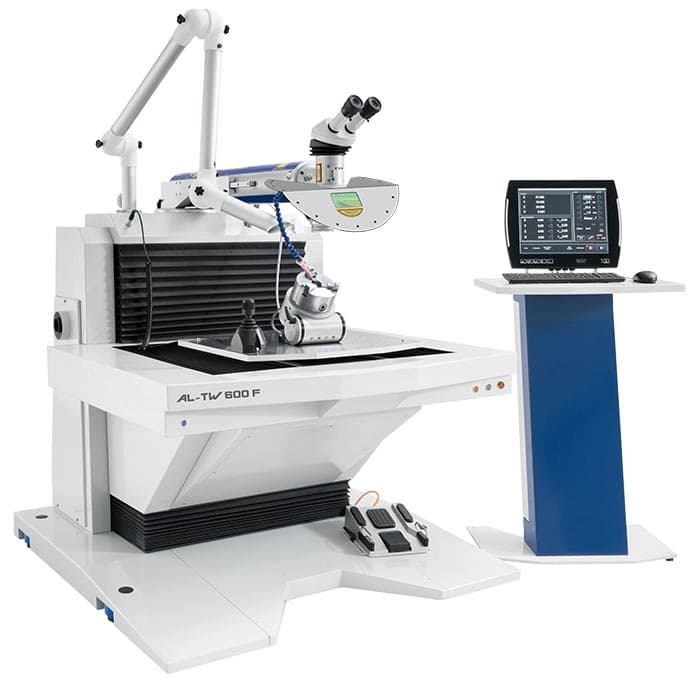
Powder deposit welding systems
Answers
Frequently Asked Questions
Still weighing up specifications? Our engineers will talk through your material mix, sheet sizes and throughput.
The full practical range, from soft build-up layers below 20 HRC through to hardfacing deposits above 70 HRC. Hardness is a property of the powder alloy rather than of the laser, so the deposit is specified by choosing the powder to suit the wear mechanism — abrasion, impact, corrosion or a combination.
Yes. Material can be added where there was none, so a die can be modified for an engineering change, a mismachined feature corrected, or a wear pad added to a component that never had one. The deposit is machined back to the new finished geometry in the usual way.
Very little. Heat input is low and localised, so hardened tool steels retain their temper and finish-machined features away from the deposit stay dimensionally stable. This is the main reason deposition welding is used on tooling where conventional welding would be far too aggressive.
It is closely related — both build parts up from metal powder using a laser. The difference is that deposition welding adds material onto an existing component, while powder-bed 3D printing builds a whole part from nothing. If you need the latter, the AL 3D Metal Printer is the machine for it.
Powder is a real consumable cost, which is why capture efficiency matters. Coaxial nozzles put the large majority of delivered powder into the melt pool, and the AL-PF's adjustable disc feed lets the rate be tuned to the deposition rate rather than run rich. We can work through consumption for your specific application.
Other Laser Processing Applications
Get In Touch
Contact Us
We work to find the service solution that fits you - and offer the technology and services to protect your investment and build your success.
Service engineers in Brisbane · Sydney · Melbourne · Perth · Wellington